fredag, februari 22, 2008

Un Jour à Paris

Tu as envie d'un café différent à Paris? L'important, c'est la possibilité d'y trouver une carte en anglais? Évidemment le Dizengoff Café sera heureux de t'accueillir.


Et oui, une fois de plus, Paris me manque déjà.
Galerie de la Fête de la Musique 2007


Commencé au Musée d'Orsay


Puis au Centre Pompidou


Proche des Champs-Élysées, mais attention: marché de l'énergie :)


J'ai eu l'occasion de visiter la Fondation Le Corbusier (la villa La Roche, en effet) dans le 16e arrondissement. Pour voir l'Exposition "Construction – Composition / Le Corbusier – Lucien Hervé".


La chambre de Marcel Proust, l'auteur d'un seul livre (!) « À la recherche du temps perdu ».


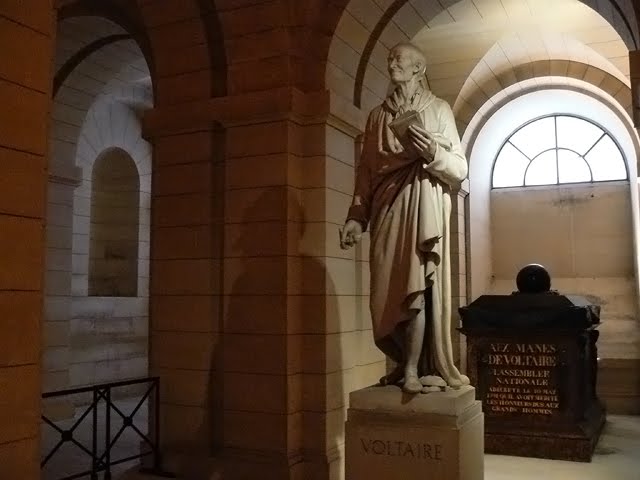
à l’intérieur du Panthéon


Ah, Notre Dame de Paris, enfin !


Sur la Seine, une chouette soirée comme ça...


Au final, Quartier Pigalle. ^^


Bonne nuit et au revoir !


måndag, oktober 29, 2007

Linnéjubileet

(2007-05-25) 1700-talsfest kring S:t Eriks torg i Uppsala. Under 2007 firades Carl von Linnés 300-årsdag i hela Sverige.


tisdag, december 26, 2006

Tanks in History

The alley leading to Pansarmuseet was an ordinary country lane tucked away in a typical Swedish landscape, relatively low, ultra flat, dotted with red wooden barn houses. "Don't worry, we are on the right path." My companion, Henrik, told me in a sympathetic voice. No street address was available for the tank museum, our final destination, in the middle of an arduous walk after we got off at Varnhem, where three Medieval pagan monarchs from the House of Eric, later Birger Jarl as well, the founder of Stockholm, and Count Magnus Gabriel de la Gardie were all buried in the well-marked historical Varnhems klosterkyrka.


Soon I found out why officially but a succinct road description existed for Pansarmuseet - because we were heading for a protected military base, in which the museum currently lay. According to a 1990 law, we were forbidden to outline the environs in verbal terms. No photos either. Once inside the museum, curiously enough, photographing was however permitted, the museum assistant rather readily assured me. As a retired military man, he was obviously delighted to see visitors dropping in. The day before, we were told, there had not been even one guest coming.

[No Picture]

Pansarmuseet was founded in 1969 by a special initiative of Rudolf Paleman, Henrik's late grandfather. An admittably young museum, it has steadily grown from a collection of 27 fighting vehicles at its inception to more than 100 nowerdays. Spending one afternoon in this treasure house would be a terrific experience for all lovers of tanks. I surely made a field day of this opportunity to be allowed close access to the tank components for a detailed view. Here every vehicle appeared in good conditions. Had it not been for lack of spare parts, they could have had us take the tanks for a real drive. The helpful guide confirmed my surmise with a yes.

Carden-Loyd Mk V, England 1928
1.4 tons, 2 men. British pre-World War II tankette. I almost mistook it for a water carrier. It was indeed reminiscent of the first tanks in history.


Renault NC 27, France 1927
8.5 tons, 2 men. Didn't work properly right from the start, the assistant said ruefully. That's quite French. lol. But does it happen to appear artistique? Like one of those animated toys in a ... Jan Švankmajer film? Héhé..


Panzerjäger Marder II ausf C, Germany 1942
Bad news for the Nazi army then, the tank motor got sabotaged in Norway in the Second World War. The Panzer eventually made its way to Sweden.


M4 Sherman, USA
Cruiser tank. Old-fashioned; but looks starkly familiar.


M3 White Scout Car, USA.
So someone painted down his belle Olga love on this patrolling car amidst the war chaos.


Churchill Mk III, England 1942
Infantry tank, a low angle view:


m/42 VKP, Sweden 1944
UN bought 15 of this type for its Indian and Irish battalions after the car went popular for missions in Congo.


m/39, Sweden
Sweden sold 13 of this type to Dominican Republic in 1958. It was reported that some of them were on the market for sale in 2004, around $30,000 for each.


m/40, Sweden (1940). Interior views:


Swedish M series on display:


Strv 103 C Sweden
Developed by Bofors AB in 1967-71. 42.3 tons, 3 men. No turret. Suitable for water operations. The fence was believed to be an innovation. Designed with the USSR in mind during the Cold War era.


Invincible tanks. Apparently they were not there in the north of Canaan, July, 2006. ;)
Judges 1:19 "And the LORD was with Judah; and he drove out the inhabitants of the hill-country; for he could not drive out the inhabitants of the valley, because they had chariots of iron."


While I was checking out the hulking juggernauts, Henrik's attention mostly went to the silent plastic tank models neatly lined up along the wall shelves. They were the old pastime work on display of his grandfather. "Impressive. How long did it take your grandpa to get each one done?" I asked him.

"On average, I think couple of weeks were normally needed." He paused a moment before he answered. "I was 8 years old when my grandpa passed away. When I see the tank models now, I can't help visualizing him working on these in his free time. I still have vivid family memories, but what I wished most to connect with after I became an adult person was his inner mind. Something possibly too complicated for an 8-year-old child to adequately understand at that time."


In a country with public sentiments traditionally going strongly anti-war, the points of view on weapons, or for that matter military establishment in general, are diverse and often in conflict. Sometimes it can cause formidable divergence of opinions even within a family. Henrik's father was said to hold an "orthodox" pacifist position, but down to the third generation, there's a notable curiosity from Henrik's part to appreciate more his grandfather's military background for an atavistic reversion. When I thanked him for his guidance as we departed, he responded just with visible contentment.

"You know, coming back again is a groovy thing. When was the last visit I paid here? Well, years years ago." For a throwback like him, alas, probably there won't be another time, given the fact that Pansarmuseet is going to move to a new home on the other side of the country and the present location is to close down in the new year.

I guess only a bike such as this one would remain staying there out of the same roadside obscurity.


- Off note as of 2008/05/30

According to an updated SvD article, the entire tank regiment P 4 in Skaraborg, which was grounded in the year of 1631, would have to be abolished under the government's current plan. This Swedish regiment has seen action most recently in Afghanistan. Read how locals reacted here.

söndag, december 24, 2006

Outside it's dark and cold

The first time the true spirit of Sankta Lucia found me as a receptive mind was during a St. Lucia Day celebration I took part in at Svenska teologiska institutet in Jerusalem on December 13, 2002. The setting of the Holy Land rendered the original religious meaning of the holiday particularly edged. Until then I didn't even know that St. Lucy had been a martyr from Sicily and the tune of the melody Neapolitan. But the fact that the name of the saint meant "light", hence "the way of light" through "in Lucy", and the fact that the fête was around the very day of the winter solstice, when outside it's dark and cold in the far North, made the Scandinavian trait of this tradition distinctly appealing to me. As an outsider, I wished someday I could even have a personalized experience of the Nordic land.

This year I witnessed the St. Lucia procession at Habo Church near Jönköping in Sweden. The building was built entirely in wood, and was "one of four churches whose pictures were reproduced by the Swedish Post Office Christmas stamps abroad" in the same 2002. Four years have passed, my life is again at a crossroad. Again I hear "natten går tunga fjät". The night walks with heavy steps.

More photos you'll find in my gallery on St. Lucia celebration:
Click Here

fredag, september 29, 2006

Two Hands

Traveling can be a wearing experience. During my last voyage on an InterCity train, I had two big cumbersome suitcases with me, which proved unwieldy travel companions. There wasn't enough room near my seat, however, so I had to leave them down the aisle and keep an open eye. On the other hand, two merry neighbors sitting next to me seized the rest of my attention. This was more fortunate as a casual chat with them made the time spent on the journey less a pain. In the end I decided to make some fun. I asked them to be my make-shift models and got their permission promptly. As you see, in such a situation the two happy travelers were just glad to lend me a hand, or two. Literally.


Elle

I was strolling down a sidewalk in town when I passed our 2006 Youth Summer Festival scene. The voice of a local singer on the stage almost instantly captivated me, so I stopped and listened. It reminded me of that of Tori Amos. Ben oui, évidemment elle semblait avoir du chien... Luckily I remembered my camera was with me just when needed. I did a small exercise of photo shooting in the next 4 minutes and felt real good.

I was quite ashamed by the fact that I couldn't find out her name afterwards. If someone delivers me an F grade based on my lack of journalistic acumen, oh, I have to accept that.

Now only her tunes count for me, I think.


torsdag, september 28, 2006

Jewish Berlin

Recently while on a trip to Berlin, I was rereading in a night train one of Haim Hazaz's short stories, "The Sermon", which had been a subject for our discussion in a Jewish History seminar. I glanced through the pages and ruminated at some length. Repeating the platitude can be a bore. Then, all of a sudden, this line caught my eye: "The talk is over! Boys, go out and play football."

As I set off to Berlin, the ongoing event of World Cup rendered me a feel of fresh excitement. Surely Berlin was a place brimming with historical poignancy and I had expected my first-time visit to the city to be an experience delved mostly into the past. It's hard to imagine, indeed, history could be in any way eschewed in Berlin. But still, I began to sense the inexorable pull of time right here and wondered aloud how man should properly advance in a different playfield than erstwhile was the case.

Many thoughts linger on my mind. For now I share with you some snapshots of Jewish Berlin that I hope you find interesting.

1. The New Synagogue in Oranienburger Street. The main hall is no longer there nowadays. Really impressive façade at the street front. On the Kristallnacht the synagogue remained undamaged because "a courageous German police officer preserved it being burnt down".


2. Jewish Museum Berlin by Daniel Libeskind. Had a tour of the current show on Freud. What a great museum! I wished I could have more time to explore the collections inside. Libeskind's architectural statement was way too strong for me, though. I wasn't so sure I agreed with him.


3. Denkmal für die ermordeten Juden Europas or Memorial to the Murdered Jews of Europe. Close to Brandenburg Gate. Many football fans from the globe stopped by and appeared curious.


4. A wall painting in the middle of the city. The turbulent 1930s.


5. Jewish community house not far away from Kaiser Wilhelm Church. I didn't get in.


6. Moses Mendelsohn's tomb. I really liked the tranquil atmosphere in the area although the historical reality couldn't be more different.


7. The statues stand in the same yard as 6. I didn't manage to figure out who was the sculptor but you could easily guess what was the theme. Nearby there are two apartment houses whose walls bear several memorial plates. These two houses were parts of one same building in the past. The separation in between as we see today was due to the Allies' air raids during the war era.


8. The location for Führerbunkern (Hitler's Bunker) was just marked publicly by the city government.